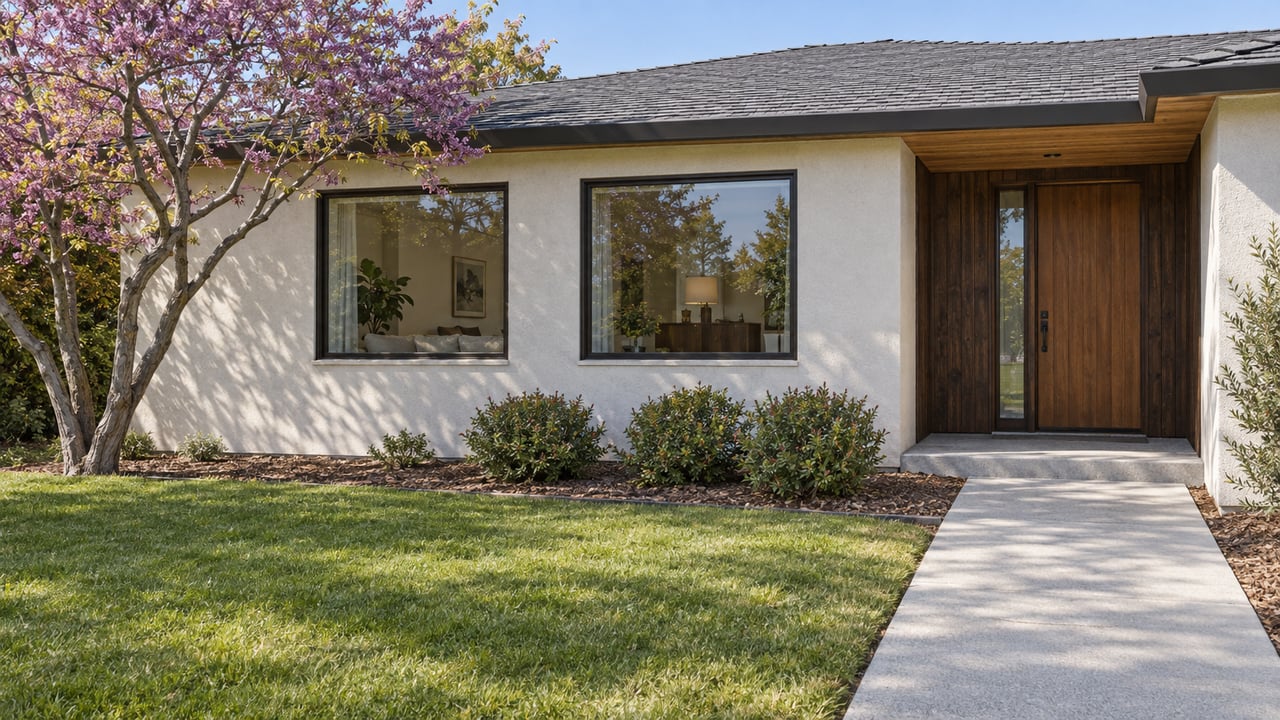
On March 6, 2026, a group of officials stood on a cleared lot at 300 Redding Road in Campbell for a groundbreaking. The group included state Sen. Anna Caballero, Mayor Daniel Furtado, Councilmember Sergio Lopez, and representatives of developer AlphaX RE Capital. The project, Mercury Lane Townhomes, is six homes. KQED reported that it is believed to be the first construction anywhere in California under SB 684, the Starter Home Revitalization Act.
KQED reported projected prices starting around $1.15 million for homes of roughly 1,400 to nearly 2,000 square feet, with three or four bedrooms and two-car garages. Completion is expected in early 2027. Campbell's resale market has very few homes like that. Under the city's rules today, it will not get many more of them from the source many residents worried about most, which is single-family streets.
The gap these homes fall into
Here is what Campbell's resale market looked like in September 2026, according to MLSListings data for the city.
| September 2026 | Single-family homes | Attached homes |
|---|---|---|
| Median sale price | $1,910,000 | $610,000 |
| Year-over-year change | Down 10.5% | Not reported |
| Median days on market | 20 | 60 |
| Sale-to-list ratio | 102% | 100% |
| Closed sales | 18 | 5 |
The attached-home median comes from only five sales, so a couple of closings can move it a lot. The overall pattern is still clear. Single-family homes sold in about three weeks at a little over asking, and inventory sat at 1.6 months. Attached homes took about three times as long to sell. The two medians are $1.3 million apart, and a three- or four-bedroom home with a garage priced around $1.15 million sits right in that gap.
Mercury Lane is not the only home in that range. KB Home opened its Meadowbrook townhomes at 100 Platform Way for tours on July 10, 2026, with three-story homes listed from $1.2 million. What sets the SB 684 projects apart is how they reach that price. Projects of two to ten units that meet the law's requirements are approved ministerially. That means no public hearings and no environmental review, and an approval within 60 days. Ruby Huo, a director at AlphaX, told KQED that the faster review cut holding and financing costs, and that without it the project would not have been financially workable. So the price depends on the approval process. That makes the process, and which lots qualify for it, the real supply question.
What the list contains
On April 21, 2026, a City of Campbell staff report listed every starter-home application on file.
| Site | Units | Zoning | Status as of April 21, 2026 |
|---|---|---|---|
| 300 Redding Road | 6 | Multifamily | Approved |
| 321 Industrial Street | 2 | Multifamily | Approved |
| 1236 W. Hacienda Avenue | 8 | Mixed-use | Approved |
| 900 S. San Tomas Aquino Road | 6 | Mixed-use | Approved |
| 1200 Smith Avenue | 6 | Mixed-use | Under review |
| 2265 S. Winchester Boulevard | 8 | Mixed-use | Under review |
| 120–132 Kennedy Avenue | 9 | Multifamily | Under review |
| Eight single-family-zoned sites | 59 combined, 5 to 10 each | Single-family | All under review |
That is 15 applications with 104 homes between them. All four approved projects sit on multifamily or mixed-use land. The eight applications on single-family-zoned lots were all still under review when the report was written. The Mercury News reported that AlphaX proposed three of those single-family-lot projects.
News coverage counts the list differently. San José Spotlight reported 16 projects already approved, representing 108 homes, and said AlphaX and its affiliated companies were behind seven of them. The city's own Starter Home Projects page is the place to check the current version. Either way, the list is short and most of what it describes is still under review.
What changed after those applications were filed
The state law allows starter homes on single-family-zoned lots only if the lot is vacant. As San José Spotlight explained, the law defines vacant as "having no permanent structure, unless the permanent structure is abandoned and uninhabitable," but it does not say when the lot has to be vacant. Campbell's 2025 implementing rules let a developer buy a lot with a livable house on it, get preliminary approval, and demolish the house afterward. The eight single-family-zoned applications were filed under those rules.
Over the next five months, the rules changed:
- April 21, 2026. The City Council voted 4 to 1 to adopt an interim ordinance requiring single-family parcels to meet the statutory definition of vacant at the time an application is submitted, "rather than at a later point after approval." The Council also voted unanimously to have staff explore a demolition-control ordinance, with input from the state's Department of Housing and Community Development.
- May 19, 2026. A motion to extend the interim ordinance fell short of the four votes required, and the item came back to the Council.
- June 2, 2026. The Council approved the extension 4 to 1, which keeps the vacancy-at-submittal rule in place through April 20, 2027, unless a later ordinance replaces it first.
- July 17, 2026. In a technical-assistance letter to the city, the Department of Housing and Community Development agreed that a single-family-zoned parcel should be vacant by the time the application is submitted. It declined to say whether Campbell could adopt a local demolition-control ordinance and cautioned that restrictive controls could slow housing production.
- September 29, 2026. Governor Newsom signed SB 1116, also written by Sen. Caballero. For applications received on or after January 1, 2027, it defines vacant as having no permanent structure unless the structure is abandoned or untenantable.
As a result, a developer can no longer use the single-family route by buying a house someone lives in and filing the same week. A lived-in house no longer counts as a vacant lot. The Council also did not roll back projects already in the pipeline. San José Spotlight reported that some residents objected to that decision, and that about 20 residents had hired an attorney and were considering legal action. Our research found no lawsuit filed as of this writing.
Where future supply in this price range is more likely to come from
SB 1116 does not shut down starter homes. It moves where they are likely to be built. The same bill lets new parcels on multifamily-zoned land be as small as 480 or 960 square feet if certain conditions are met. It also stops counting stairs toward the 1,750 net habitable square foot average size limit. That favors the lots that already produced every approved Campbell project on the list, which are multifamily and mixed-use parcels on corridors such as Winchester, San Tomas Aquino, and Hacienda.
Larger ownership projects are also moving through approval in the same general range:
- 600 E. Campbell Avenue. The Planning Commission approved a revised Cresleigh Homes mixed-use project on February 10, 2026, which The Registry describes as 120 homes.
- Campbell Technology Parkway. A proposal for 290 homes, made up of 27 detached homes and 263 townhome-style condos, has a Final EIR dated September 22, 2026. The city still has to consider and decide whether to certify that report before acting on the project itself, which it can approve, revise, or reject.
Neither project depends on whether a house on a single-family street counts as vacant. Neither moves on a 60-day ministerial timeline, either.
In June, Campbell staff wrote that if SB 1116 became law, the city would need to consider a revised ordinance in the second half of 2026. As of mid-October, our research had not found that the city had taken that step.
What this means if you are deciding between Campbell and somewhere else
If a three- or four-bedroom home with a garage around $1.15 million fits your budget, Campbell's starter-home supply is real but small. It will also arrive gradually. Mercury Lane is expected in early 2027, and AlphaX told KQED it plans to open an interest list partway through construction. We could not find published HOA dues or ownership details, such as whether the homes are sold as condominiums or as separate lots. Those terms affect your monthly cost and your financing as much as the price does, so ask about them when a sales package comes out.
If you are looking at existing single-family homes, the city's application list is worth checking for the blocks you are considering. Eight of the applications sit on single-family-zoned lots, where a project of five to ten homes could replace a single house. Campbell resident and housing developer Jim Sullivan told San José Spotlight that starter homes "work, but at certain locations such as corners." Whether a pending project is next door is something you can check against city records before you write an offer.
Frequently asked questions
Does the vacancy-at-submittal rule apply to the applications already on file? The Council did not roll back projects already in the pipeline, according to San José Spotlight. The status of each pending application is set by the city, so the City of Campbell's Starter Home Projects page and planning staff are the sources to check.
Is Campbell blocking starter homes? No. The four approved projects on the April list are on multifamily and mixed-use land, and the city's rule addresses only when a single-family lot has to be vacant. HCD's July letter agreed with that timing.
When does SB 1116 take effect? Its changes apply to applications that local agencies receive on or after January 1, 2027.
This post is general information about how these rules work. It is not legal, tax, or financial advice, so please confirm how they apply to a specific property with a qualified professional.
If you own a home in Campbell and want to know how the starter-home pipeline affects its value, or you are weighing a new townhome against a resale house, VKG Real Estate Group can walk through the city's application list, the approval timelines, and the comparable sales with you, starting with a free home valuation.