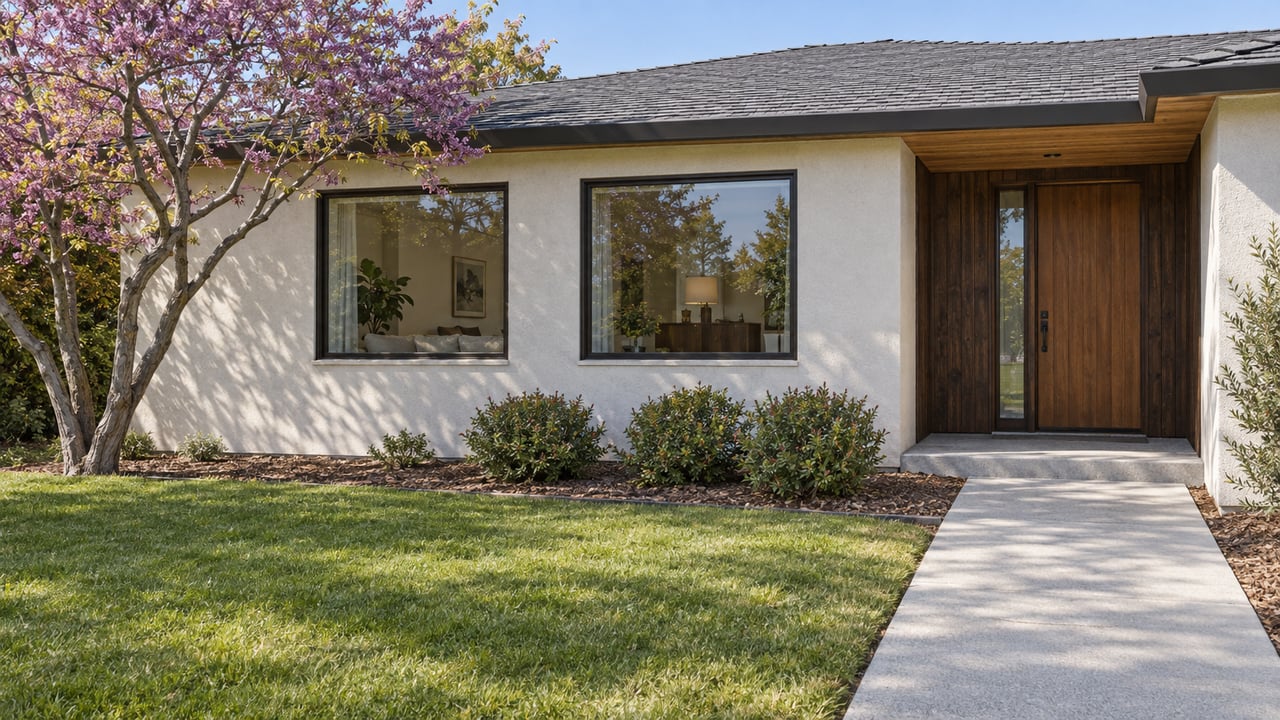
A house in Saratoga bought in the late 1970s for under $100,000 is worth close to $4 million today. That gap is the whole story, and it is also the reason so many families who inherit these homes spend months debating a decision that a spreadsheet could have settled on day one.
The public conversation around inherited property in California centers on Proposition 19 and the tax break it offers heirs who keep the family home. What gets skipped is the condition attached to that break, and what happens to the math when a Saratoga home's original assessed value is nowhere close to its current market value. For most families here, the honest answer to "will anyone actually live in this house" ends the debate long before anyone calls an agent.
Trust or probate, and who can even sign
Before taxes matter, someone has to have the legal authority to sell. That authority depends entirely on how the parent or grandparent held title.
The Santa Clara County Superior Court explains that a successor trustee manages trust property and may sell assets held in the trust.
If there was no trust, the home goes through probate, and California's shortcut for small estates does not help here. That means a full probate filing through the Santa Clara County Superior Court's Probate Division, with a personal representative appointed under the Independent Administration of Estates Act. The scope of that appointment matters more than most heirs expect: full IAEA authority lets the representative sell without a court confirmation hearing, while limited authority means the sale has to go back in front of a judge before it can close, adding weeks that a trust sale never has to absorb.
Selling the house is usually one of the first tasks handled, not the last. Families also need to file a death-related change-in-ownership statement within 150 days of the date of death, or alongside the inventory and appraisal if the estate is in probate, as the California State Board of Equalization explains.
The tax math nobody runs until the offer is already in hand
Here is where the real decision gets made. Under the 2026 rules, the California State Board of Equalization says a child who inherits a parent's home can keep the parent's lower property tax base only if they move into the home within a year and use it as their primary residence. The break itself is capped: the exclusion covers the original assessed value plus up to $1,044,586. Anything above that combined figure gets added to the new taxable base.
Run that against a fairly typical Saratoga scenario. A home purchased in 1980 for roughly $90,000 carries an assessed value today, after decades of Proposition 13's 2 percent annual cap, of somewhere around $225,000. Add the $1,044,586 exclusion and the protected threshold comes to about $1.27 million. A home now worth $4 million blows past that threshold by roughly $2.7 million, and that excess gets folded into the new taxable value. The heir's property tax bill does not stay near $2,500 a year. It lands closer to $32,000 a year, even with the tax break fully applied.
That is the number that changes minds. It also only helps if someone in the family is actually willing to move into a decades-old house in Saratoga as their primary residence, which for adult children established elsewhere with their own homes, careers, and school districts, is rarely the plan. When nobody intends to occupy the property, the exclusion does not apply at all and the home gets reassessed to full market value regardless. Selling stops being the fallback option and becomes the option that was always going to win once the numbers were on paper.
What "exempt from disclosure" doesn't cover
Once a family decides to sell, trustees often hear that they are exempt from California's standard disclosure paperwork and relax more than they should. Under Civil Code Section 1102.2(d), a trustee selling trust property is often excused from completing the full Transfer Disclosure Statement, as long as the trustee never lived in the home within the past year and was never an owner of it themselves.
That exemption covers the form. It does not cover the underlying duty. A trustee who knows about a leaking roof, foundation movement, or a past water intrusion problem still has to disclose it, exemption or not. The friction shows up in a specific place: a home held by one family for thirty or forty years often has deferred maintenance that nobody currently managing the estate actually witnessed firsthand, because the heirs live elsewhere and the parent stopped mentioning small problems years before they became big ones. The exemption does not create a gap in what needs to come out. It just changes who is likely to find it, and inspection findings that surface mid-escrow cost far more in renegotiation than the same issues caught and addressed before the home ever goes live.
Reading the market while the estate clock runs
Saratoga's resale market as of August 2026 gives a clear read on why timing this correctly matters. Listings have been moving in about two weeks on average, inventory has sat around two months of supply, and homes have been closing near or slightly above their asking prices. That is a market with very little room for a home that needs work discovered after it is already under contract.
It is also a market where the typical home value has pulled back by roughly mid-single digits year over year through the first half of 2026, which gives buyers a bit more room to negotiate than they had during the peak. Tight inventory and softer pricing sound contradictory, but together they describe a market that rewards preparation more than it rewards speed. A trust or estate home that sits through repairs, cleanout, and staging before it lists is competing against a smaller pool of properly presented listings. One that lists as-is, with issues a buyer's inspector finds first, is negotiating from a weaker position in a market that no longer has to forgive that.
The practical move for families navigating probate or trust administration is to run the pre-listing inspection and basic repairs during the legal waiting period rather than after it. The court timeline and the market timeline do not have to run in sequence.
Frequently asked questions
When do probate sales need court approval? Probate sales only need one if the personal representative was granted limited rather than full authority under the Independent Administration of Estates Act.
What if the trustee actually lived in the home before the parent passed away? The Civil Code 1102.2(d) exemption from the standard disclosure form does not apply in that case. A trustee who lived in the property within the past year, or who was a former owner, has to complete the same disclosure paperwork as any other seller.
Does selling the home affect the property tax reassessment either way? Yes. If the home is sold rather than kept as a primary residence by an heir, the property is reassessed to current market value for the new buyer at closing, and the exclusion under Proposition 19 becomes irrelevant to the outcome.
None of this replaces advice from a probate attorney or tax professional, and every estate carries its own wrinkles. What a family in this position usually needs first is a clear-eyed read on what the house is actually worth today, what it would cost to prepare for market, and how long the legal side will realistically take. VKG Real Estate Group works with Saratoga trustees, executors, and heirs through exactly that process, and a free home valuation is a reasonable place to start before any other decision gets made.
This article is general information, not legal, tax or financial advice. Consult a qualified professional about your situation.